Program – UX Rotterdam 2026
Two Days. Two Ways to Learn. One Big Experience.
At UX Rotterdam, you decide how to experience the conference.
Do you want to get hands-on and experiment in workshops? Or would you rather sit back, listen, and get inspired by big ideas on the main stage?
With two parallel tracks — Workshops and Keynotes — you’re free to build your own experience.
First day program
Thursday 16th of April
08.00 Doors open: Registration and Coffee
Chrissy Welsh | VP Experience @KPN
Designing for the Age of Asking: How AI is Rewriting the Rules of Experience
We are standing at the edge of a major UX shift. For decades, our job was to help people find things, cleaner flows, better navigation, smarter search.
But with the rise of LLMs and intelligent agents, users will no longer search, they will ask. The interface disappears, the logic remains.
This talk explores how design must evolve in the Age of Asking, when experience moves from visual interaction to cognitive reasoning. I’ll share lessons from building AI-driven experiences at KPN, where we’re rethinking brand behaviour, tone, and trust for agent-based services.
Together we’ll explore how to design for clarity when the interface is invisible, how to preserve brand identity when an AI speaks for you, and how to build trust in systems that now think before they respond.
It’s the future of UX, and it starts with a single question.
Natalia Marmolejo | Design Lead @Rabobank
Designing for Buy‑In
Organizations don’t change through slides—they change through people. In this keynote, Natalia shares the moments and missteps that taught her how design can shift not just projects, but mindsets.
You’ll hear how strategic design opened unexpected doors with business stakeholders, reshaped HR priorities, and challenged long‑held assumptions. Most importantly, you’ll learn how purpose-led work and personal convictions can spark policy‑level change that ultimately transforms employee experience.
Hector Ayuso | Creative Director @Paradiso
Everything you have is what you give away
At UX Rotterdam, Héctor will share his personal and creative mantra: “Everything you have is what you give away.” His keynote is a reflection on generosity, identity, and the invisible threads that connect our work to others—told through stories from his career, lessons from OFFF, Paradiso, and the projects that shaped him.
Ivo van Hulten | Director Of UX @Porsche
The Future Of Driver Experience At Porsche
I will bring a sneak-peek into our UX/UI Design-Lab in Weissach, Germany. Here we design and develop the next generation of Porsche cars and its typical “Driver Experience Design”.
I will explain how we set-up a holistic design approach, while carefully maintaining our strong brand-DNA. Showcasing the way, we translate our brand values into a systematic and modern design approach.
Alain Dujardin | Creative Director @Greenberry
Designing with, not for: A co-design mindset for societal impact
In the face of complex societal challenges, designing *for* people is simply not enough. It’s about designing *with* them. Join Alain Dujardin, creative director at design agency Greenberry, as he shares firsthand experiences and essential insights from over a decade of co-design projects aimed at meaningful societal change. Alain will uncover practical strategies for creating truly inclusive digital experiences by placing users at the heart of the design process.
Through inspiring stories—from tackling eating disorders to preventing youth violence—he'll show how deeply listening, embracing diverse perspectives, creatively shaping research methods, and making feedback central are keys to creating solutions that matter.
He will also reflect on how AI can creatively amplify co-design processes, highlighting both its potential and the pitfalls to be aware of. Expect an honest exploration into both successes and setbacks, and leave equipped to bring this powerful, collaborative mindset into your own UX practice.
Julia Bastian | VP Of Product @Alasco
Discovery Slop - The research that looks shiny but is sh*tty
AI has made discovery output faster and shinier than ever. But fast and shiny is not the same as deep and true.
Real discovery is about finding contradictions, sitting with complexity, and synthesising and not about smoothing everything into a polished blur. Product people have stopped thinking. And nobody notices because the output looks great. But product sense is built through thinking, not through consuming.
This talk is about what real discovery looks like in the age of AI. Stop consuming shiny discovery slop. Start thinking again.
Amrita Joerawan | Sociologist @Ganes Solutions
An interactive keynote focused on mental health and career development. Based on the four DIEP pillars: Diversity, Inclusion, Equality, and Purpose.
My keynote is an interactive session about mental resilience and inclusive work culture.
Participants engage in a live "Step Forward" exercise and digital interaction to experience how it feels to navigate careers under ongoing (global) changes and pressure, all while focusing on developing from a customer-focused point of view and being your true self at all times.
Together, we translate this into actionable micro-solutions and steps everyone can take tomorrow.
Henk Haaima | Creative Director @Total Design
Are AI agents taking over UX?
With the rapid advent of AI agents, we are increasingly delegating the tasks of viewing and navigating web pages. They browse, click, and make decisions on our behalf.
This transformation has major implications for traditional user interfaces and accessibility standards, as digital experiences are shifting focus from human users to AI agents.
What happens to User Experience Design (UX) when users can largely bypass the carefully crafted interfaces created by design teams?
Karolina Boremalm | Director Global Digital Experience @Ecco
Who’s Really in Control?
Algorithms shape what we watch, buy, believe—and even who we become. What once felt like distant science fiction has quietly become everyday reality.
In this keynote, Karolina Boremalm, ponders how our pursuit of perfection and efficiency has led us to surrender more control to systems than we realize.
From curated playlists and “perfect partner” apps to AI-generated models and algorithmic feeds, she explores how invisible design decisions influence our choices, our creativity, and our sense of self.
It’s an invitation to pause and reflect on the balance between human intuition and machine intelligence—and to consider what it truly means to design for, and with, humans in an age of algorithms.
Ruddy Rodriguez | Design Manager @Bol.com
How design teams can extend strategic influence in the age of AI
This talk explores how design can drive AI strategy beyond traditional product work. Through bol.com's journey activating a partner-focused AI vision across 300+ people and 47,000 partners, you'll see how experience-led thinking creates shared ownership across departments.
From translating AI ambitions into tangible perspectives at C-level, to orchestrating organization-wide alignment, to enabling experimentation through fake-door tests and proof-of-concepts—design gains traction by owning not just vision creation, but adoption and activation.
You'll leave with practical insights into strategic design leadership, cross-functional alignment, and positioning design as a clarifying force in emerging technology.
Jeroen van Geel | Independent Creative Strategist
Curiosity Unleashed The Key To True Innovation
Companies, and people alike, often gravitate towards stability, aiming to control every aspect of their journey. This leads them to rely on tried-and-true design patterns, technical solutions, and preferences that have a proven track record. Consequently, our landscape is saturated with safe, albeit monotonous, choices.
But what if you’re driven for real change? This is precisely where the audacity to rewrite the rules comes into play. In a world where conformity is the default, we’re embarking on a journey to unveil the astonishing potential of curiosity! This talk is a tailor-made expedition for the pioneers driving products, services, and entrepreneurial endeavours.
Bart Jan Steerenberg | Lecturer @Amsterdam University Of Applied Sciences
Developing creative growth for the next generation designers
How to train designers in a rapidly changing world. How can you facilitate Future proof education? I want to show a couple of examples of projects and show how we train students in the minor Immersive environments to become immersive experience designers.
Mei Zhang | Senior Designer @Booking.com
The AI Design Toolkit: Mapping Design Methods with Gen AI Technology
Even with the rapid development of Generative AI tools, one fundamental truth remains: the core process of human-centered design thinking: from Empathize, Define, Ideate, Prototype, and Test, leading to Iterate.
The designer is now, more than ever, the strategic gatekeeper. Our core value lies in defining the right methods for any given problem space. Knowing how to leverage Gen AI efficiently to execute these methods is a crucial competitive advantage today.
Are you looking for a practical guide on which Gen AI technologies to use for which design methods, and how to apply them? Then come to my talk and unlock The AI Design Toolkit. You will learn how to integrate AI in each design thinking phase throughout the entire design process, ensuring you focus on solving the right problem.
Jean Jacques Sliepen | AI Consultant & Founder @Optmzr.ai
Start from Zero: Trust Yourself, Not the Process
I’ll challenge UX professionals to abandon their sacred cows — the design process we’ve been preaching for a decade — and embrace a more uncomfortable truth: in the AI era, your value isn’t in following steps. It’s in knowing when something is worth building.
Expect a reality check on how tools have changed the game, why the double-diamond never really produced great work, and what separates designers who thrive from those who get left behind. I’ll share frameworks for 10x thinking instead of 10% optimization, and make a case for why intuition — that dirty word — might be your most valuable skill.
This talk isn’t just for senior designers — it’s for anyone who’s felt the ground shifting beneath their role and wants to know where to stand next. You won’t get a new process to follow. You’ll get permission to trust yourself. “Don’t trust the process. Trust yourself.”
Merel Backers | Founder @Digizorg
Designing from the Inside Out
In my talk, I’ll share what it’s like when something deeply personal grows into something much bigger than you ever expected.
I’ll talk about how Digizorg started, how we began building digital products inside a hospital where product development was still unfamiliar. How I found my way in that context. What worked, what didn’t, and what I’m still figuring out.
Marc Laros | Chief Technology Officer @The Usual
Agentic AI as a new layer in the guest journey
At UX Rotterdam, Marc shares practical insights from applying AI inside a live hospitality environment. The keynote focuses on agentic AI as a new layer in the guest journey. Not as a feature, but as an invisible assistant working across touchpoints.
The storyline follows the guest experience from arrival to departure. It shows where traditional UX patterns fall short and where agentic systems step in. Examples include proactive service, personalized decision making, and seamless handovers between digital and human interactions.
The talk closes with practical design principles. When to automate. When to involve people. How to align guest experience, operational efficiency, and sustainability into one coherent system.
Harmen Van Balen | UX Director @Fabrique
The power of design in an AI-shaped world
I will challenge the room to rethink our as (UX) designers. But also to question what we will desperately try to hold onto. What should we let go of as designers? Where should we stop resisting and start making space for technology? And how does this shift make our work better, not smaller?
My keynote explores the evolving relationship between AI and human intelligence. A world where products become cheaper and faster to create, interfaces fade, and interaction becomes more human, more intent-driven.
The real question is no longer whether AI will change our work. It already has. The question is how we choose to respond. Where do we allow technology to lead? Where must human judgment, empathy, and sense-making remain dominant?
And what becomes our responsibility in shaping experiences in this new reality?
This talk is about redefining relevance. Not by clinging to old roles, but by stepping into new ones. The power of design in an AI-shaped world.
Merel Schöffel | Strategy Lead @Humanoids
Skill Kill: Craft in the age of automation
I’m sharing a story about what it means to be a specialist in an AI-driven world. I’ll start with the myth of “AGI”, a term that sounds impressive, but doesn’t reflect the reality of what we’re building or what we actually need. The real shift is happening elsewhere: in how AI is reshaping the way we develop expertise.
We’re facing a strange paradox. Organisations say they can’t find enough technical talent, yet junior roles are disappearing fast. In tech, entry-level positions dropped by 35%, while demand for seniors keeps rising. Everyone wants seniors, but we’re quietly removing the conditions required to create them.
AI is taking over much of the work that used to help juniors learn. It seems efficient, but it removes the space where skills are formed. Researchers call this skill atrophy: not the loss of jobs, but the loss of abilities. And that’s risky at a time when we need more digital competence, not less.
My keynote explores what this shift means for developing expertise, why juniors are the first to feel the impact, and what it means for teams and organisations that depend on long-term competence rather than short-term output.
Most importantly, I’ll talk about what the solution looks like in practice: creating intentional learning spaces, keeping real thinking work in human hands, pairing juniors with experienced colleagues, and using AI to support reasoning rather than replace it.
Because if we want to have specialists in the future people who truly understand the craft we have to design environments where they can actually learn it. Spaces that build the foundation for good design and for healthy workplaces where people can grow, contribute and stay confident in their skills.
Ilayda Küçükosmanoğlu | Head Of Design @Ditto
Beyond the Checklist: Why Accessible Design Still Leaves People Behind
Everyone deals with health in some way: managing care, supporting others, or taking care of themselves. Accessibility in digital tools are often checked boxes: screen readers, font sizes, contrast. What’s too often overlooked is how different levels of medical knowledge and literacy affect the ability to understand and act on information.
Two years ago, I started researching patient needs and accessibility from multiple perspectives and learned how to apply these insights in my work. I noticed how language and health literacy shape the way we process information, which made me look at the people close to me through a different lens. I realized it’s not just “users” who struggle with this, my parents face these challenges too. Today, that motivates me to make health information more accessible for everyone.
In this keynote, I’ll share what I’ve learned and show how thoughtful design and emerging technologies can transform complex medical information into clear, actionable guidance for all.
Tiffany Chew | Product Design Lead @Cotton On Group
The Human Cost of Human-Centered Design
Here’s the uncomfortable truth: we spend our careers advocating for users, but who’s advocating for us? Through experiencing rock bottom in both professional and personal life, I learned that you can be your own safety net.
It explores the moment things feel completely out of control and how to take power back. Through a simple framework of protecting, conserving, and acquiring your resources, whether you’re leading teams at scale or navigating your first year in UX, you’ll discover one transformative question that changes how you approach your career, your team, and your worth.
It’s about designing a career as intentionally as we design experiences – with clarity, boundaries, and the wisdom to know what’s worth fighting for.
Stijn Nering Bogel | Digital Product Designer @KOOS Agency
This talk was not designed for you. Taking responsibility in systems that exclude.
Most of the time, exclusion in digital products is not the result of bad intent or ignorance. It’s the “reasonable” decisions that quietly stack up that create exclusive systems. If exclusion is systemic, solutions must be systemic too. And that is where we as UX designers should take responsibility… In this talk I’ll unpack how bias and business trade-offs shape the experiences we call neutral. I want to invite you to challenge your own defaults, rethink where accountability sits, and reconsider what “good design” really means.
Maarten Reijgersberg | Founder @RAUWcc
The Renaissance of Mascots to Virtual Brand Ambassadors
His keynote will explore how brands are evolving from using flat mascots to deploying AI-powered digital beings with emotional intelligence and purpose.
Storyline of the keynote:
- How it all started with storytelling and a vision to humanize technology.
- The creation and growth of virtual influencer Esther Olofsson.
- Three major advantages of virtual brand ambassadors: consistency, flexibility, and cost-effectiveness.
- The design and UX challenges of developing conversational AI and digital humans.
- A glimpse into the future.
He will end with three actionable tips for designers and brands:
- Bridge the silos. Connect tech, strategy, legal and creativity.
- Go long-term. Don’t just launch; build a character.
- Think big, start small, learn fast. Embrace experimentation!
Workshops are first come, first seated (no pre-registration)
Flaminia Del Conte | Strategic Designer @Seedble
Service Safari Workshop
I'm bringing a Service Safari workshop — a practical way to get out of the building, into the world, and design with more humility and perspective.
We’ll observe real-life services, make sense of how they work (and where they break), and learn how to turn those insights into design opportunities. It's a method rooted in curiosity, active listening, and deep respect for people’s lived experiences.
This is for anyone who wants to design more responsibly — and who believes the answers don’t live in a boardroom.
Flaminia Del Conte | Strategic Designer @Seedble
Service Safari Workshop
I'm bringing a Service Safari workshop — a practical way to get out of the building, into the world, and design with more humility and perspective.
We’ll observe real-life services, make sense of how they work (and where they break), and learn how to turn those insights into design opportunities. It's a method rooted in curiosity, active listening, and deep respect for people’s lived experiences.
This is for anyone who wants to design more responsibly — and who believes the answers don’t live in a boardroom.
Hector Ayuso | Creative Director @Paradiso
Everything you have is what you give away
In his narrative workshop, Héctor will dive into the art of storytelling—not as formula, but as feeling. Using scenes from films he loves and we all know, he’ll guide participants through structure, tension, emotional truth, and the power of POV. It's hands-on, personal, and rooted in the belief that stories aren't told—they're shared.
Hector Ayuso | Creative Director @Paradiso
Everything you have is what you give away
In his narrative workshop, Héctor will dive into the art of storytelling—not as formula, but as feeling. Using scenes from films he loves and we all know, he’ll guide participants through structure, tension, emotional truth, and the power of POV. It's hands-on, personal, and rooted in the belief that stories aren't told—they're shared.
Workshops are first come, first seated (no pre-registration)
Anna Arteeva | Product Design Leader
Note: For this workshop you need to bring your laptop!
From Mockups to Living Apps: Multimodal Prototyping with AI?
What if we could prototype experiences beyond visual UI? These days, building a functional multimodal multi-device experience is easier than describing it in a dev ticket.
Forget hypothetical user flows, mind maps and hand waving to explain how a product should work. You can vibe code the entire thing: from UI to actual functionality, including AI powered features, voice interactions and agentic behaviour, integrated with real dynamic data and personalised for each user.
Instead of stitching mockups together, build an actual app, keep all the nuances, test it in a natural way instead of making testers imagine interactions that don’t exist, get high quality feedback and real metrics, hand over real code and maybe, just maybe, even release it to customers.
In this workshop we will build an experience with AI powered functionality, voice interactions and personalisation, and explore what this might mean for our professions.
We'll use Lovable, Gemini model for AI features, and ElevenLabs for voice interactions. Lovable Pro is included.
Anna Arteeva | Product Design Leader
Note: For this workshop you need to bring your laptop!
From Mockups to Living Apps: Multimodal Prototyping with AI?
What if we could prototype experiences beyond visual UI? These days, building a functional multimodal multi-device experience is easier than describing it in a dev ticket.
Forget hypothetical user flows, mind maps and hand waving to explain how a product should work. You can vibe code the entire thing: from UI to actual functionality, including AI powered features, voice interactions and agentic behaviour, integrated with real dynamic data and personalised for each user.
Instead of stitching mockups together, build an actual app, keep all the nuances, test it in a natural way instead of making testers imagine interactions that don’t exist, get high quality feedback and real metrics, hand over real code and maybe, just maybe, even release it to customers.
In this workshop we will build an experience with AI powered functionality, voice interactions and personalisation, and explore what this might mean for our professions.
We'll use Lovable, Gemini model for AI features, and ElevenLabs for voice interactions. Lovable Pro is included.
Thomas Gorree | Creative Director @Online Department
From Pixels to Performance: Winning with Business-Aware Design
Design only becomes truly valuable when it’s not only good for the user, but also drives business goals forward. Designers are eager to make real impact — but often struggle to turn that ambition into measurable business outcomes.
In this interactive workshop, you’ll explore Business-Aware Design — designing with business objectives in mind and making your choices measurable, defensible, and strategically aligned. Through relatable, real-world examples, I’ll show how this mindset helps you win over stakeholders, fight feature creep, and create products that truly perform.
You’ll dive into challenging cases, designing solutions that move both the user and the business forward. We’ll close with a fast-paced UX Showdown, where teams share their insights and surprising discoveries, with plenty of “aha!” moments guaranteed.
Whether you’re part of an in-house design team, a digital agency, or a cross-functional product squad, you’ll leave with practical methods to connect design decisions to measurable impact. To make design a true driver of business performance. In short, it’s all about becoming more relevant with BAD UX.
Thomas Gorree | Creative Director @Online Department
From Pixels to Performance: Winning with Business-Aware Design
Design only becomes truly valuable when it’s not only good for the user, but also drives business goals forward. Designers are eager to make real impact — but often struggle to turn that ambition into measurable business outcomes.
In this interactive workshop, you’ll explore Business-Aware Design — designing with business objectives in mind and making your choices measurable, defensible, and strategically aligned. Through relatable, real-world examples, I’ll show how this mindset helps you win over stakeholders, fight feature creep, and create products that truly perform.
You’ll dive into challenging cases, designing solutions that move both the user and the business forward. We’ll close with a fast-paced UX Showdown, where teams share their insights and surprising discoveries, with plenty of “aha!” moments guaranteed.
Whether you’re part of an in-house design team, a digital agency, or a cross-functional product squad, you’ll leave with practical methods to connect design decisions to measurable impact. To make design a true driver of business performance. In short, it’s all about becoming more relevant with BAD UX.
Workshops are first come, first seated (no pre-registration)
Bente Bak | Freelance Product Designer
The UX Comic workshop - Learn how to draw and create your own UX comic
UX Comic is a weekly hand-drawn series that shines a light on the funny, relatable side of UX. It pokes fun at design life; from battling client monsters, diving into a deep sea of user insights, to feeling like a design ninja on a good day.
The series is created and illustrated by Bente Bak, a designer who finds insight and humor in the messy, human side of UX.
In this workshop, you’ll learn the basics of drawing and how to use this effectively in your design process. In the second part we will dive into daily design challenges and look for the lightness by creating UX comics. Think: lots of doing and connecting with peers!
Bente Bak | Freelance Product Designer
The UX Comic workshop - Learn how to draw and create your own UX comic
UX Comic is a weekly hand-drawn series that shines a light on the funny, relatable side of UX. It pokes fun at design life; from battling client monsters, diving into a deep sea of user insights, to feeling like a design ninja on a good day.
The series is created and illustrated by Bente Bak, a designer who finds insight and humor in the messy, human side of UX.
In this workshop, you’ll learn the basics of drawing and how to use this effectively in your design process. In the second part we will dive into daily design challenges and look for the lightness by creating UX comics. Think: lots of doing and connecting with peers!
Krasi Bozhinkova | Strategic Design @Owtcome
Signals Before Stats
It is a hands-on session for UX and product leaders who are navigating decisions faster than the data can keep up.
In today’s AI-fueled pace, waiting for clean data is a luxury most teams can’t afford. But acting without it doesn’t have to mean guessing. The key is recognizing the shifts in user behavior and the tension in the experience quickly and turning them into tactical product moves that create momentum.
The workshop introduces Flip / Pivot / Hack, a practical framework to act with clarity under pressure and uncertainty: Flip – Rethink the what and the who behind your product Pivot – Reframe the why or how the value is delivered Hack – Design smarter and faster ways to learn before you commit
The participants will work through common UX inflection points across the user journey and walk away with a tool they can apply in their own team the next day. Clarity doesn’t just come from dashboards; it comes from making smart moves at the right time, with confidence.
Krasi Bozhinkova | Strategic Design @Owtcome
Signals Before Stats
It is a hands-on session for UX and product leaders who are navigating decisions faster than the data can keep up.
In today’s AI-fueled pace, waiting for clean data is a luxury most teams can’t afford. But acting without it doesn’t have to mean guessing. The key is recognizing the shifts in user behavior and the tension in the experience quickly and turning them into tactical product moves that create momentum.
The workshop introduces Flip / Pivot / Hack, a practical framework to act with clarity under pressure and uncertainty: Flip – Rethink the what and the who behind your product Pivot – Reframe the why or how the value is delivered Hack – Design smarter and faster ways to learn before you commit
The participants will work through common UX inflection points across the user journey and walk away with a tool they can apply in their own team the next day. Clarity doesn’t just come from dashboards; it comes from making smart moves at the right time, with confidence.
Second day program
Friday 17th of April
08.00 Doors open: Registration and Coffee
Alvin Chan | Creative Director @Superlarge
Pressure Is a Privilege: Designing systems that unleashes creativity
We all talk about user-centered design. But what about the humans inside the systems that create those designs?
In this keynote, Alvin Chan takes you behind the scenes of some of the most intense creative environments on the planet — from short-window global athlete shoots, to hierarchical brand teams, to siloed global tech structures — to reveal how pressure interacts with people and systems in unexpected ways.
From the highest levels of success to the brink of burnout, Alvin shares his journey of learning how pressure isn’t the enemy — the systems around us are. Through a series of memorable case studies, he illustrates how thoughtful frameworks, human judgment, and intentional conditions can turn pressure into a catalyst for better decisions, deeper trust, and more sustainable creative output.
This talk isn’t about tools or tactics; it’s about designing the conditions under which creativity thrive, even when time is compressed, stakes are high, and expectations are immense. You’ll walk away with mental models and principles you can apply immediately — whether you’re shaping user experiences, leading teams, influencing culture, or crafting strategy under uncertainty.
Ultimately, this keynote is an invitation to reimagine pressure as a privilege that reveals the systems we live in — and the systems we can design for better human outcomes.
David Oldenburger | Head Of UX @ABB E-mobility
Design at the Edge of Chaos
Chaos is not the exception in our industry right now. It's the condition. An EV industry rewriting its own rules. A business reinventing itself from the ground up. A design team being built, from zero, in the middle of all of it.
This talk isn't about answers. It's about what it actually looks like to lead design through that, and what it takes to create experiences that stop people in their tracks, even on the most technical, industrial products. Large format interfaces. Considered typography. Interaction design that respects the user even when the context is a car park in the rain.
And it's about what this moment is asking of designers. When AI is flattening perceived expertise, when there's no legacy to stand on, when the room expects you to have all the answers, fearlessness isn't just a personality trait. It's a professional necessity.
An honest look at the chaos we're all operating in, and why that might be exactly where we belong.
Ash Oliver | New Media Manager @Lovable
A fireside chat about: Branding in the Age of AI.
Instead of a traditional keynote, this session takes the form of an open conversation with Ash Oliver from Lovable.
Together, we’ll explore how AI is rapidly reshaping the way we design, build, and think in the age of AI.
From the rise of vibe coding to new tools that blur the line between design and development, the role of the designer is evolving faster than ever.
This is a chance to go beyond a presentation and into a more dynamic, honest conversation about where our industry is heading.
Serena Westra | Senior Business Designer @IKEA
How designers can apply “experiment design” to test business ideas.
IKEA’s products account for nearly 10% of the second-hand market in Europe, but until recently, IKEA was not directly participating. With the launch of IKEA’s second-hand marketplace, customers have the opportunity to buy and sell directly from each other, and prolong the life of furniture.
During my talk, I will share my insights and challenges of being part of the innovation journey of IKEA’s marketplace. I will explain how designers can apply “experiment design” to test business ideas, and create real impact.
Wouter Dirks | Business Director @Studio Dumbar / DEPT
From Rotterdam with love!
I will talk about how our design, motion, sound and coding work for our clients has been impacted, how we adapted to it and what Studio Dumbar/DEPT® has learned. I will try to add a bit of humor to it as well.
Eelco Van Collenburg | Executive Creative Director @Valtech
The interior is the work
At UX Rotterdam 2026, expect a talk where provocation is balanced with reflection, but where no punches are pulled. Why the future of creative work depends not just on the development of new tools and features, but on protecting and cultivating something older and quieter: the development of our inner worlds.
Eelco will also explore what it means to design with conviction in a time when creativity risks becoming generic, softened by automation and system thinking that flatten difference.
Drawing from client work, personal stories, quiet observations, and even the wisdom of obscure philosophers, famous rappers, and recent insights from the human sciences, he’ll share how he sees AI not as the fiery comet that wipes out creativity, but the delicate spark we all needed, and maybe secretly have been waiting for.
Peter Boersma | DesignOps Consultant @Self-Employed
How to make sure the right DesignOps initiatives are executed with the right people, to have the biggest possible impact.
DesignOps helps design teams be more efficient, effective, and happy by creating the best possible circumstances for design. Whether there are full-time DesignOps professionals available or just several people with the DesignOps mindset, coordination of DesignOps initiatives is necessary to have the biggest impact.
Peter recommends working with a continuously updated roadmap for DesignOps, featuring prioritised initiatives, a rough planning, and expected impact on the design team’s metrics.
Anna Arteeva | Product Design Leader
Design After Screens: Crafting Experiences in the AI Era
Design has long been defined by screens. Our tools shaped our outputs, and our creativity lived inside frames, layers, and flows.
But as AI enters the design process, the centre of gravity shifts. AI entered the design space with bold promises about automating mockups and accelerating UI production… and then refused to follow the script. Instead of transforming the visual layer, it opened an entirely different door, one that leads far beyond visual UI.
This talk looks at what becomes possible when designers gain the ability to design with code, and shape interactions that speak, listen, reason, adapt, and even act on a user’s behalf. From multimodal interfaces to outcome-based interactions and agentic systems, we’ll explore how AI is expanding the role of design far beyond the screen — and where this new frontier is taking us next.
Nils Van Den Broek | Founder @Valsplat
Bringing Back the Human Scale to the Digital World
We are at a crossroads. Digitalization has taken over our lives at a staggering pace, but along the way, we lost the human scale. Our digital world is becoming smarter and more efficient, but also colder and less inclusive.
In this talk, Nils draws a powerful parallel with a pivotal moment in history when technology reshaped our world, until people decided to reclaim their space. He challenges the obsession with "digital-first" and shows why designers and leaders must step up to actually put people first. Come for a reality check and leave with the spark to make the digital world human again.
Jeeyoung Yang | Design Lead @IBM
Unshakable: Design that Never Expires
Tools are ephemeral. Trends are seasonal. But the fundamental friction of being human—and the need for design that solves for it—is timeless.
We are so obsessed with how fast our industry is moving with AI but are losing sight of the core values that make our work matter. Drawing on insights from a multicultural upbringing and a career built on grit, Jeeyoung reveals the timeless principles that keep designers relevant and unshakeable.
Discover how to lean into the values of the human core—values that have been there all along.
Michael Vromans | Chief Creative Officer @DPDK
Brand Focus: Why the Loudest Brands are Losing
In a world overflowing with noise, most brands desperately try to stand out simply by shouting louder. This struggle has been exponentially accelerated by the rise of AI, which enables both agencies and in-house teams to mass-produce content at breakneck speed.
The promise of efficiency sounds beautiful in the boardroom, but in daily practice, brands are degrading into fragmented, directionless, and interchangeable customer experiences. During this talk, Michael exposes the painful gap between brand ambition and fragmented execution.
Learn how to take back control as a design or brand leader, leave the fragmentation chaos behind, and build a brand that doesn’t shout louder, but feels unmistakably cohesive in every single interaction.
Workshops are first come, first seated (no pre-registration)
Peter Boersma | DesignOps Consultant @Self-Employed
How to make sure the right DesignOps initiatives are executed with the right people, to have the biggest possible impact.
This workshop teaches you how to make sure the right DesignOps initiatives are executed with the right people, to have the biggest possible impact.
This workshop is for you, if you want to contribute to improving the circumstances for your design team, coordinate improvement initiatives, and track the metrics that determine their impact.
Peter Boersma | DesignOps Consultant @Self-Employed
How to make sure the right DesignOps initiatives are executed with the right people, to have the biggest possible impact.
This workshop teaches you how to make sure the right DesignOps initiatives are executed with the right people, to have the biggest possible impact.
This workshop is for you, if you want to contribute to improving the circumstances for your design team, coordinate improvement initiatives, and track the metrics that determine their impact.
Jeroen Den Uijl | Designthinker @Sopra Steria
How might we embed AI Solution Thinking into every designer’s creative toolkit?
Participants will experience a part of the AI Design Sprint, a method that combines familiar design practices like journey mapping and co-creation with a structured way to explore where AI can meaningfully enhance a solution.
We’ll show how designers can move beyond buzzwords and confidently design AI solutions that serve users, create business value, and are technically feasible, all without needing technical expertise.
The session is for any designer who has ever felt unsure how to get started designing for AI and wants to be confident, credible, and creative in leading the AI conversation.
Jeroen Den Uijl | Designthinker @Sopra Steria
How might we embed AI Solution Thinking into every designer’s creative toolkit?
Participants will experience a part of the AI Design Sprint, a method that combines familiar design practices like journey mapping and co-creation with a structured way to explore where AI can meaningfully enhance a solution.
We’ll show how designers can move beyond buzzwords and confidently design AI solutions that serve users, create business value, and are technically feasible, all without needing technical expertise.
The session is for any designer who has ever felt unsure how to get started designing for AI and wants to be confident, credible, and creative in leading the AI conversation.
Workshops are first come, first seated (no pre-registration)
Diantha Boll | Senior Product Designer @Eneco
Note: For this workshop you need to bring your laptop!
Design for the blind, rethink the way we approach design
Take a deep breath and imagine navigating a website - clicking on a menu, scrolling content, clicking a button - all without sight. Every step, every reach, guided not by what you see, but by what you feel, hear, and remember. For over 253 million people around the world, this isn't just an exercise—it's reality.
In this workshop, Design for the Blind, we’re rethinking the very way we approach design. It’s about building with empathy, with awareness, and with the understanding that accessibility is not an afterthought—it’s a foundation.
What does this user group need for an amazing digital experience? What would that ‘look like’? Whether you are a designer, architect, developer, or simply someone passionate about making the world a more inclusive place, this workshop is an opportunity to rethink the possibilities and to be part of a design revolution that truly sees everyone.
Diantha Boll | Senior Product Designer @Eneco
Note: For this workshop you need to bring your laptop!
Design for the blind, rethink the way we approach design
Take a deep breath and imagine navigating a website - clicking on a menu, scrolling content, clicking a button - all without sight. Every step, every reach, guided not by what you see, but by what you feel, hear, and remember. For over 253 million people around the world, this isn't just an exercise—it's reality.
In this workshop, Design for the Blind, we’re rethinking the very way we approach design. It’s about building with empathy, with awareness, and with the understanding that accessibility is not an afterthought—it’s a foundation.
What does this user group need for an amazing digital experience? What would that ‘look like’? Whether you are a designer, architect, developer, or simply someone passionate about making the world a more inclusive place, this workshop is an opportunity to rethink the possibilities and to be part of a design revolution that truly sees everyone.
Henk Haaima | Creative Director @Total Design
Are AI agents taking over UX?
With the rapid advent of AI agents, we are increasingly delegating the tasks of viewing and navigating web pages. They browse, click, and make decisions on our behalf.
This transformation has major implications for traditional user interfaces and accessibility standards, as digital experiences are shifting focus from human users to AI agents.
What happens to User Experience Design (UX) when users can largely bypass the carefully crafted interfaces created by design teams?
Henk Haaima | Creative Director @Total Design
Are AI agents taking over UX?
With the rapid advent of AI agents, we are increasingly delegating the tasks of viewing and navigating web pages. They browse, click, and make decisions on our behalf.
This transformation has major implications for traditional user interfaces and accessibility standards, as digital experiences are shifting focus from human users to AI agents.
What happens to User Experience Design (UX) when users can largely bypass the carefully crafted interfaces created by design teams?
Workshops are first come, first seated (no pre-registration)
Rinaldo Ugrina | Independent UX & Product Strategist
Strategic Storytelling: How to Persuade, Inspire, and Move Ideas Forward
You've done the work. You've identified the right problems, conducted thorough research, and built solutions that will genuinely move the business forward.
But when you present to stakeholders, something gets lost. Your insights get buried under questions about timelines and trade-offs. Your strategic rationale disappears into "let's revisit this next quarter." The meeting ends with polite nods, and no decision. You walk away thinking: "Why didn't that land?"
If this sounds familiar, you're not alone. Across every organization, brilliant UX work is getting overlooked, not because it isn't valuable, but because it isn't communicated in a way that moves people.
Most professionals think influence happens in the meeting room. It doesn't. By the time you're presenting, stakeholders should already understand, question, and feel ownership over your idea. Great UX work doesn't speak for itself. It needs strategic communication to move from insight to implementation.
You will learn a system for turning stakeholders from evaluators into collaborators, so your work doesn't just get heard, it gets acted on.
Rinaldo Ugrina | Independent UX & Product Strategist
Strategic Storytelling: How to Persuade, Inspire, and Move Ideas Forward
You've done the work. You've identified the right problems, conducted thorough research, and built solutions that will genuinely move the business forward.
But when you present to stakeholders, something gets lost. Your insights get buried under questions about timelines and trade-offs. Your strategic rationale disappears into "let's revisit this next quarter." The meeting ends with polite nods, and no decision. You walk away thinking: "Why didn't that land?"
If this sounds familiar, you're not alone. Across every organization, brilliant UX work is getting overlooked, not because it isn't valuable, but because it isn't communicated in a way that moves people.
Most professionals think influence happens in the meeting room. It doesn't. By the time you're presenting, stakeholders should already understand, question, and feel ownership over your idea. Great UX work doesn't speak for itself. It needs strategic communication to move from insight to implementation.
You will learn a system for turning stakeholders from evaluators into collaborators, so your work doesn't just get heard, it gets acted on.
Yorick Dekker | Senior UX Designer & Design Thinker @Stedin
Speculative Design: Innovating Beyond Present Patterns
Wouldn’t you like to break away from your day-to-day way of thinking and known patterns? You can do so with Speculative Design Thinking.
This method looks to the future rather than to today and goes beyond individual user experiences. It focuses on future societies and how we can help them.
With challenges and questions like ‘What if we lived in a world without screens? How would we assist our users then?’ By speculating about these kind of scenario’s we broaden our horizon and start to think differently about problem-solving.
We go beyond traditional Design Thinking and trigger our imagination much more, which ultimately helps us solve the challenges of the future instead of today.
Yorick Dekker | Senior UX Designer & Design Thinker @Stedin
Speculative Design: Innovating Beyond Present Patterns
Wouldn’t you like to break away from your day-to-day way of thinking and known patterns? You can do so with Speculative Design Thinking.
This method looks to the future rather than to today and goes beyond individual user experiences. It focuses on future societies and how we can help them.
With challenges and questions like ‘What if we lived in a world without screens? How would we assist our users then?’ By speculating about these kind of scenario’s we broaden our horizon and start to think differently about problem-solving.
We go beyond traditional Design Thinking and trigger our imagination much more, which ultimately helps us solve the challenges of the future instead of today.
Download our program as pdf
Prefer a complete overview at a glance? You can also download the full UX Rotterdam program as a PDF — perfect if you want to review all speakers, workshops, and sessions in one place. Be aware that the program can still have some changes next couple of months so keep an eye on the latest version.
Create your own program
and discover different spaces at the venue
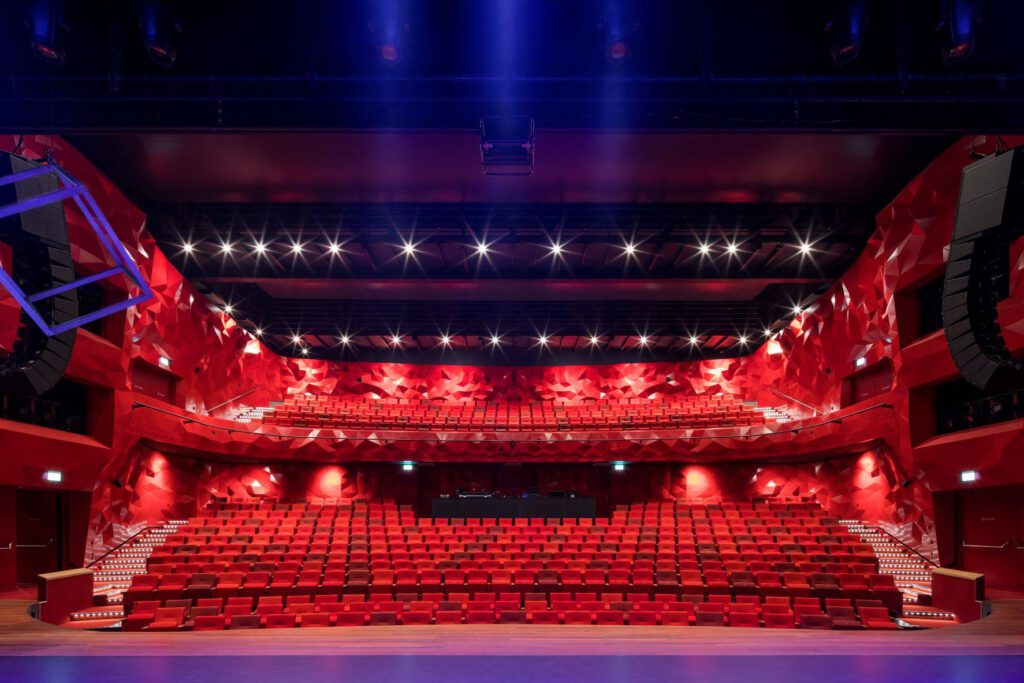
The Main Theater – Where Ideas Take Center Stage
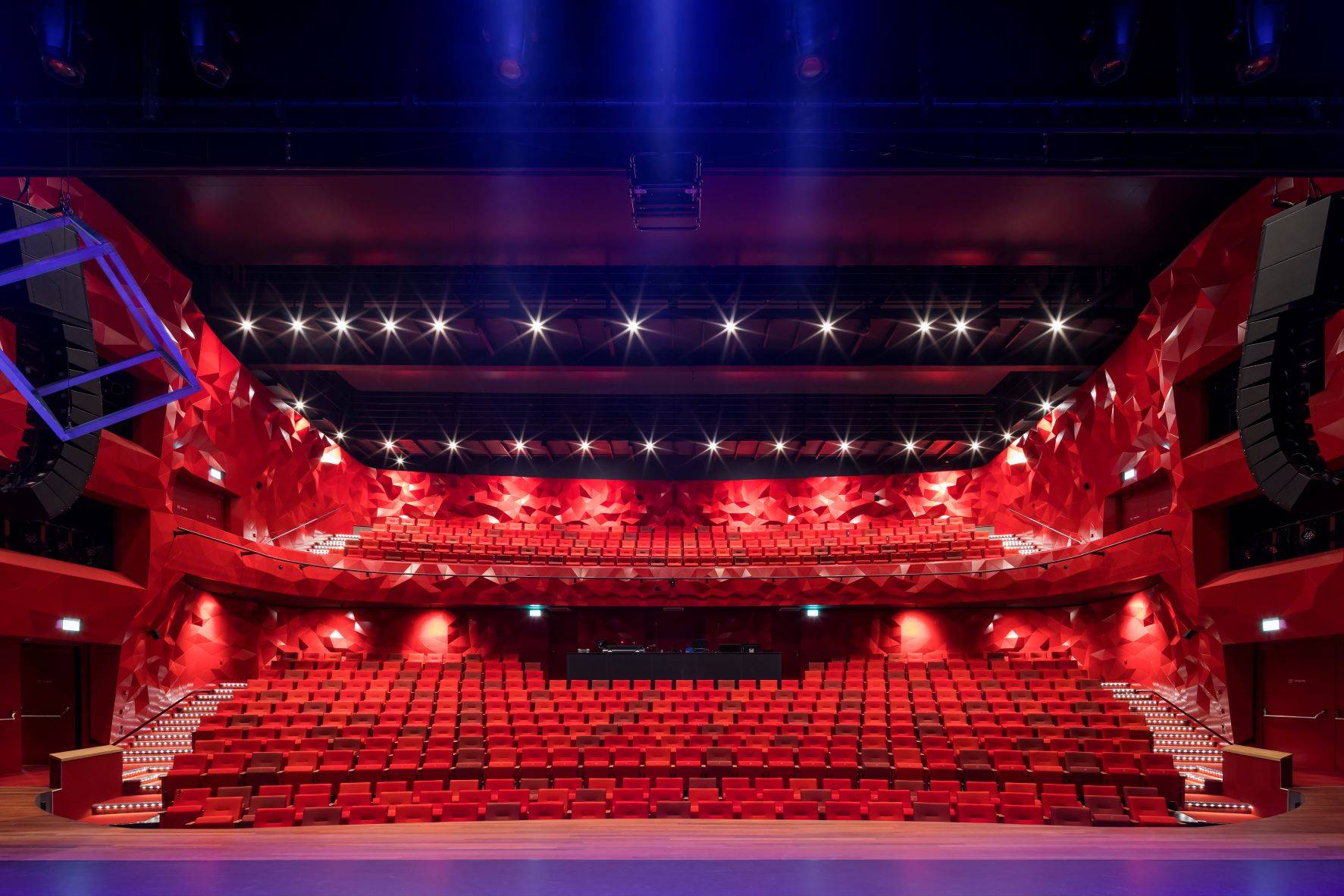
All keynotes at UX Rotterdam 2026 take place in the Main Theater of Zuidplein Theater — a state-of-the-art venue with seating for 650 attendees.
With its modern acoustics, spacious stage, and dynamic atmosphere, this is where the conference’s biggest ideas come to life.
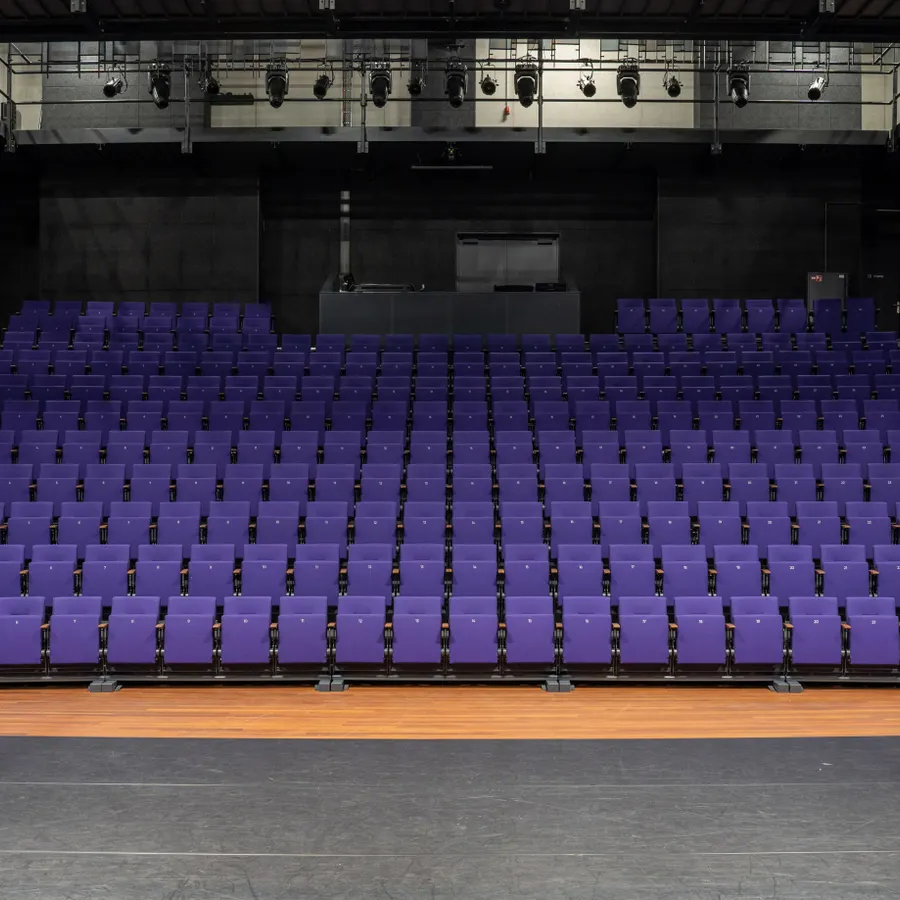
The Small Theater – Home of the Side Program
In addition to the main stage, UX Rotterdam 2026 offers a dedicated small theater with seating for 250 attendees.
This intimate space hosts our extra keynotes program
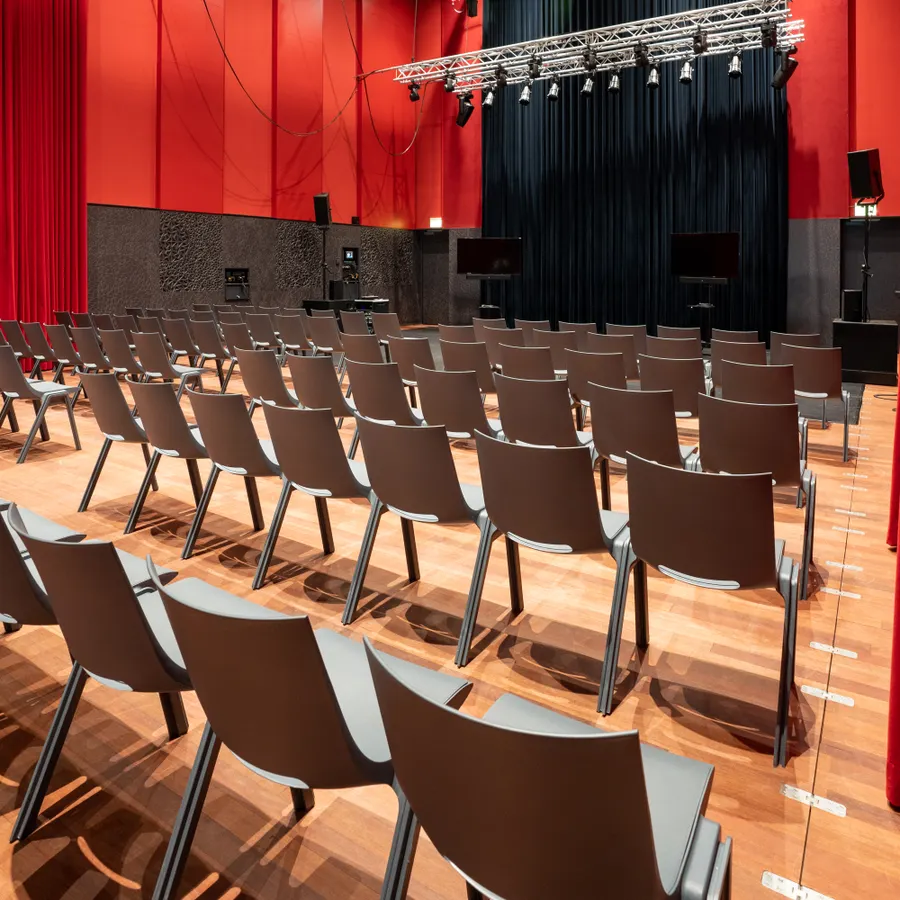
Workshop Spaces – Hands-On Learning Environments
Alongside the main and small theaters, UX Rotterdam 2026 features three dedicated workshop rooms designed for interactive, small-group learning.
Workshops run in parallel to the keynotes, giving you the flexibility to choose between hands-on practice or inspirational talks throughout the day.
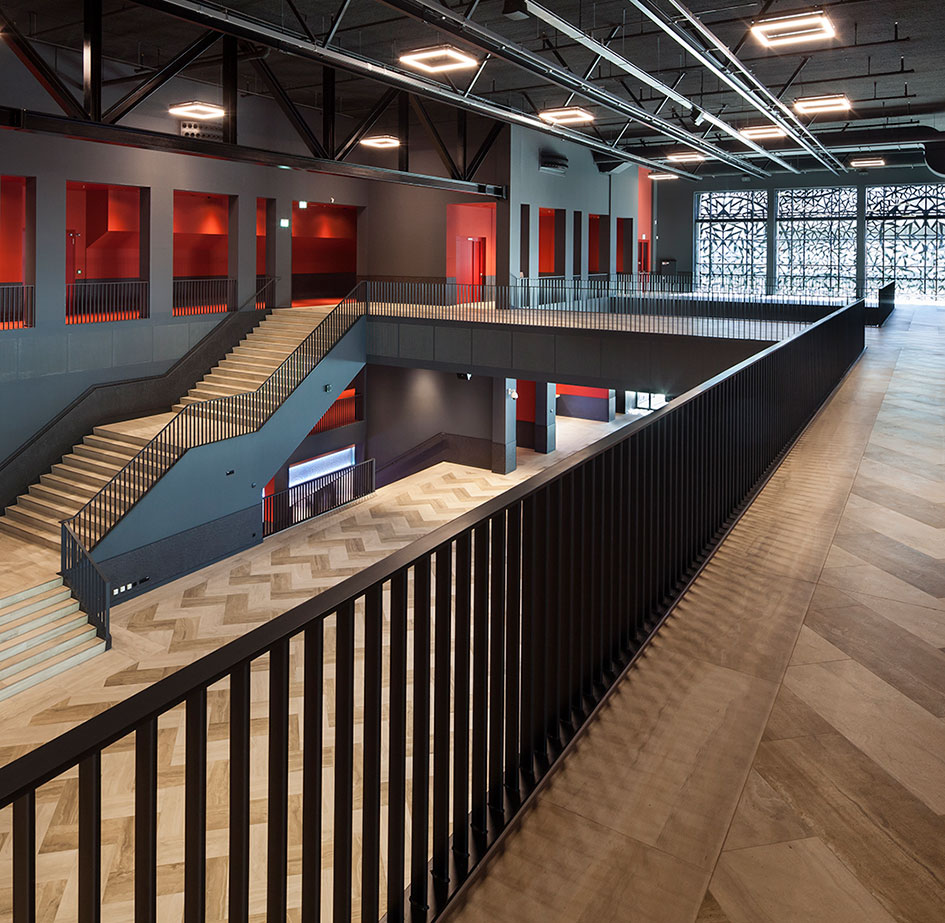
Career Hub – Meet Your Next UX Opportunity
The Career Hub is a dedicated space at UX Rotterdam where designers, agencies, and companies connect.
It’s a place to explore career opportunities, meet potential employers, and have informal conversations about work, growth, and the future of design.